

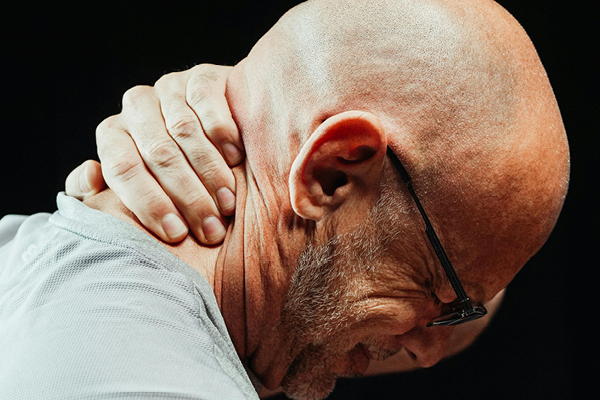
Ever wondered how doctors know whether they should x-ray their patient’s neck? Have you been in a car accident and are curious as to why no one wanted to give you an x-ray? There are specific guidelines that have been created to make it easy to determine whether someone requires an x-ray of their neck post trauma. There are two main decision-making tools that healthcare practitioners can use to determine if it is needed. Let’s take a closer look at both.
The first decision making tool is the Canadian C-Spine Rule (CCR). It is applicable for patients who are alert and stable following trauma where there is concern about a cervical spine injury. It is not applicable in non-trauma cases, if the patient has unstable vital signs, or are less than 16 years of age. Let’s look at the specific questions in the toolkit.
There are several questions that must be asked with the CCR. First – are there any high-risk factors that mandate an x-ray? High risk factors include being 65 or older, a dangerous mechanism or paresthesia in the arms and/or legs. A dangerous mechanism would be considered a fall from greater than 3 feet, a force directly to the top of the head, a high speed/rollover/ejection car accident, motorized recreational vehicle accident and a bicycle accident. If you answer yes to any of this – you should get an x-ray. If you answer no, we move on to the next question.
Are there any low risk factors which allow safe assessment of neck movement? Low risk factors would include a simple rear end car accident, being able to sit, being ambulatory, delayed onset of neck or no midline cervical spine tenderness. If you answer no to any of this – you should get an x-ray. If you answer yes, we move on to the next question.
Are you able to actively rotate the neck 45 degrees left or right? If you answer no – you should get an x-ray. If you answer yes – you do not need an x-ray.
The second decision making tool is the NEXUS. It is applicable for patients who have experienced trauma. It has five questions.
Neck imaging is not needed if all five of the following are true:
(1) No posterior midline cervical tenderness. This means there is no pain when you touch the bones down the middle of the neck. (2) Normal level of alertness. This means you must be awake and be able to identify such things as the time and place. (3) No evidence of intoxication. This one is self-explanatory. (4) No focal neurological deficit. This will be determined by a trained health practitioner via a variety of questions and tests. (5) No painful distracting injuries. This would mean you have an injury that is more severe or painful and distracting you from a potential secondary neck injury.
Both tools have their pros and cons. The CCR is more accurate and sensitive but more complex and difficult to remember. It also has age cutoffs. The NEXUS is simpler and has no age cutoffs but is less accurate.
Certain physiotherapists have advanced training to allow them to order diagnostic images, such as x-rays. If you are concerned you may need an x-ray, there are several physiotherapists at Panther Sports Medicine who can help you out.